
What happens after the solar quote - why "just send it through" kills deals in Australia
Most solar businesses think they have a closing problem. They actually have a follow-up problem. In Australia, the majority of solar deals that go quiet after quoting do not die because the homeowner said no - they die because nothing happened after the quote landed. The post-quote window is the highest-leverage moment in your sales cycle, and most businesses leave it entirely to chance.
Why does "just send it through" kill solar deals?
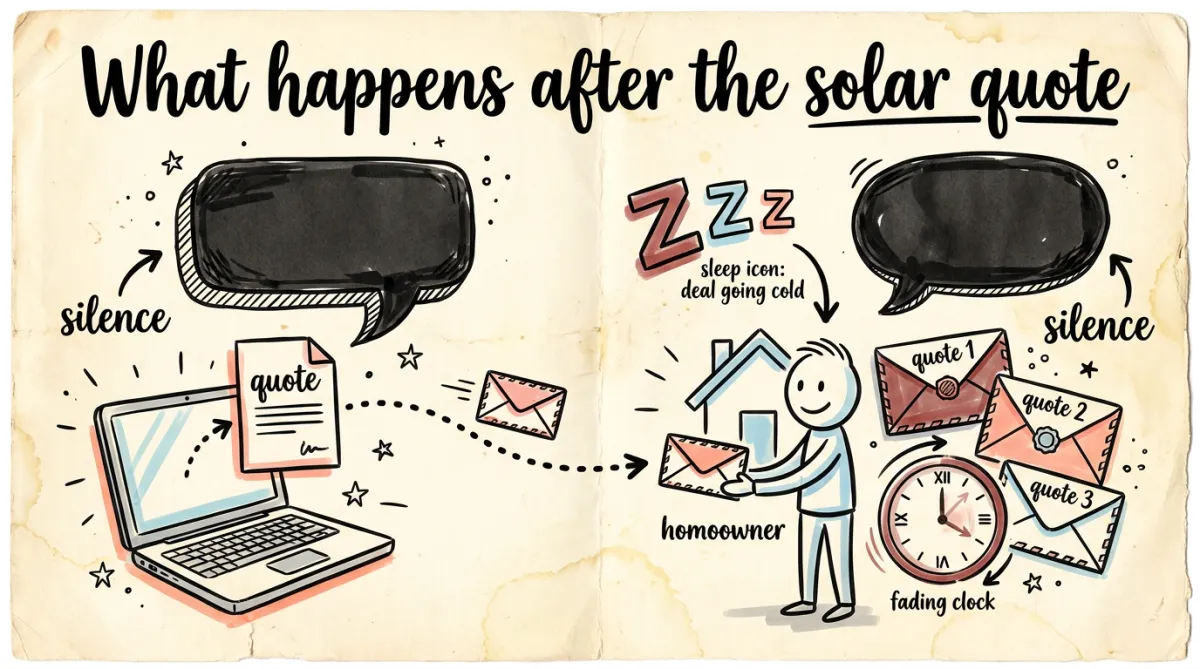
When a homeowner says "just send it through", it feels like progress - you have done the work, the quote is with them, the ball is in their court. It is not progress. It is a handover to silence.
At the moment you hit send, the homeowner has a PDF and nothing else. No momentum, no next step, no person following up with genuine intent. What they do have is three other quotes from three other installers who are in exactly the same position. Whoever fills that silence first - with the right tone and timing - owns the next conversation.
The Harvard Business Review has documented that the average business takes more than 40 hours to respond to a lead. In solar, where the buying window is narrow and comparison is active, that gap is where deals go cold.
What happens in a homeowner's mind after receiving a solar quote?
Solar is a considered purchase. Homeowners do not read one quote and sign on the spot. They compare, they delay, they talk to the other person in the house, and they let the decision drift until something re-ignites it.
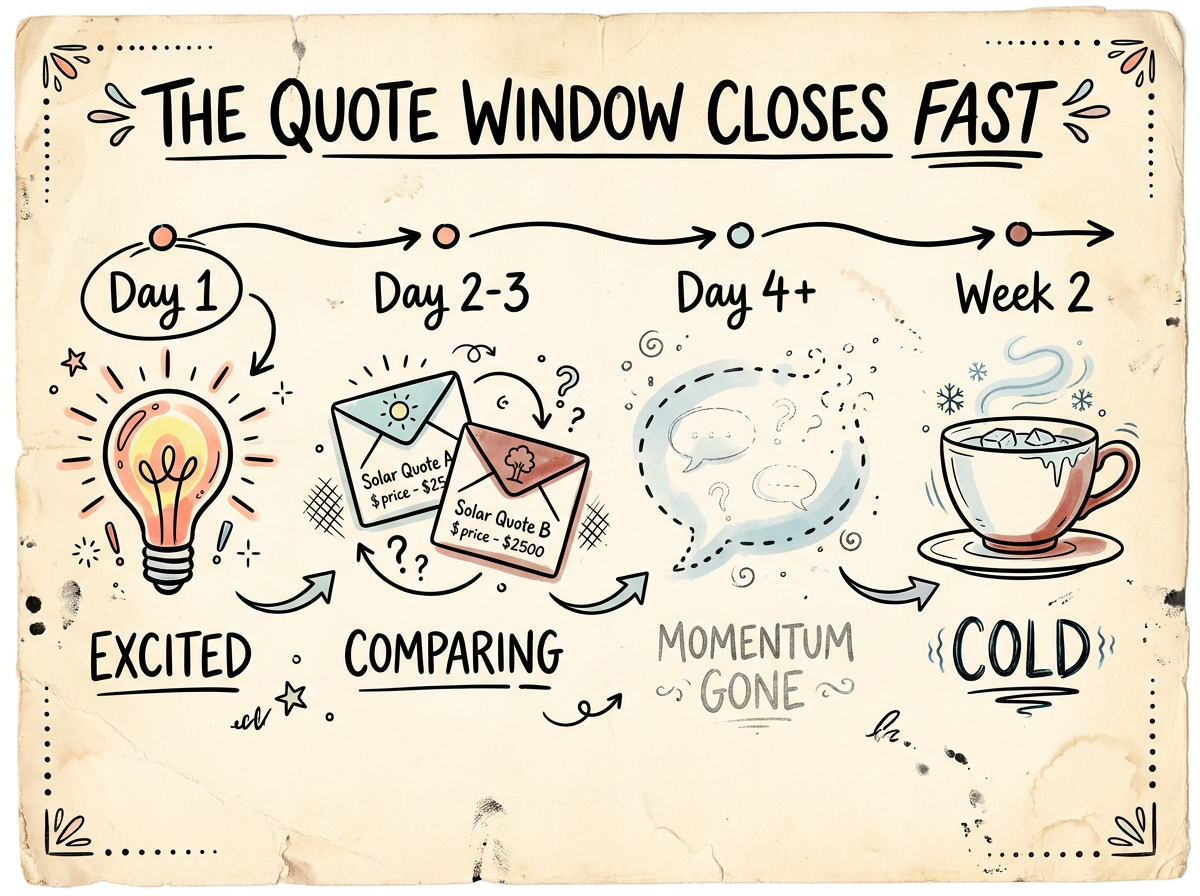
Here is the sequence that plays out after a quote lands:
Initial interest fades fast. The urgency the homeowner felt when they requested the quote - high power bills, a neighbour who just went solar - dissipates within days. Life gets in the way: work, school, weekends.
Comparison kicks in. The quote sits alongside two or three others. Without a clear differentiator being reinforced, it becomes a price race - and in a price race, the cheapest wins.
The decision stalls. The homeowner has not said no, but they have not said yes either. They are in limbo, and limbo has a shelf life. The research on lead decay - from the MIT Lead Response Management Study - confirms that the probability of contacting and converting a lead drops sharply within the first hour and continues to fall with each passing day.
By the time most solar businesses call the following morning, the emotional window has already begun to close.
How long do solar businesses have to follow up before a lead goes cold?
Faster than most teams operate. The MIT Lead Response Management Study is direct on this: contacting a lead within five minutes dramatically increases the likelihood of reaching and qualifying them, compared with waiting even 30 minutes. After a quote is sent, the same principle applies in reverse - the longer the silence, the more the homeowner's attention moves elsewhere.
This does not mean a single frantic call. It means structured, sequenced follow-up that starts from the moment the quote lands - not the next morning when someone remembers to check the CRM.
What is the both-decision-makers problem in solar quotes?
This is the most common silent killer in solar sales, and the most overlooked.
A residential solar sale almost always needs both decision-makers present - the enquirer and their partner. When a quote is sent to one person and follow-up only ever reaches that one person, the deal is structurally set up to stall. The second person in the household has never heard your voice, never built rapport, and has every reason to be sceptical of a decision made without them.
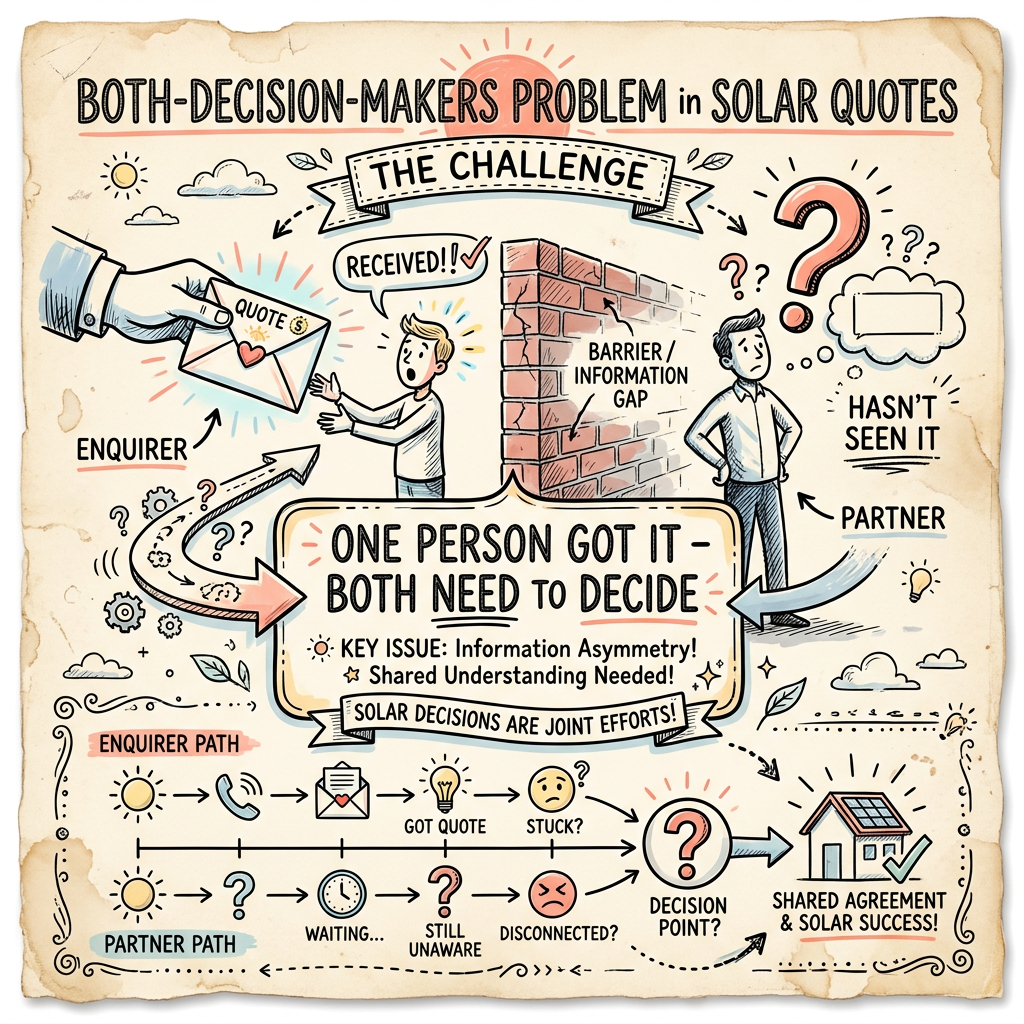
"I'll have to run it past my wife/husband" is not an objection to handle at the point of close. It is the result of a follow-up process that never qualified for both decision-makers from the start. A quote that lands with one person and stays there has a far lower chance of converting than one where the follow-up actively works to include both.
Strong follow-up identifies this early and addresses it before the assessment is booked - not after a site visit that was never going to close.
Why does the silence gap open after a quote - and why is it so hard to close manually?
The silence gap opens for a straightforward reason: sending a quote is not the same as managing the post-quote relationship. Most solar businesses treat the quote as a handoff. The homeowner treats it as a starting point for their own research.
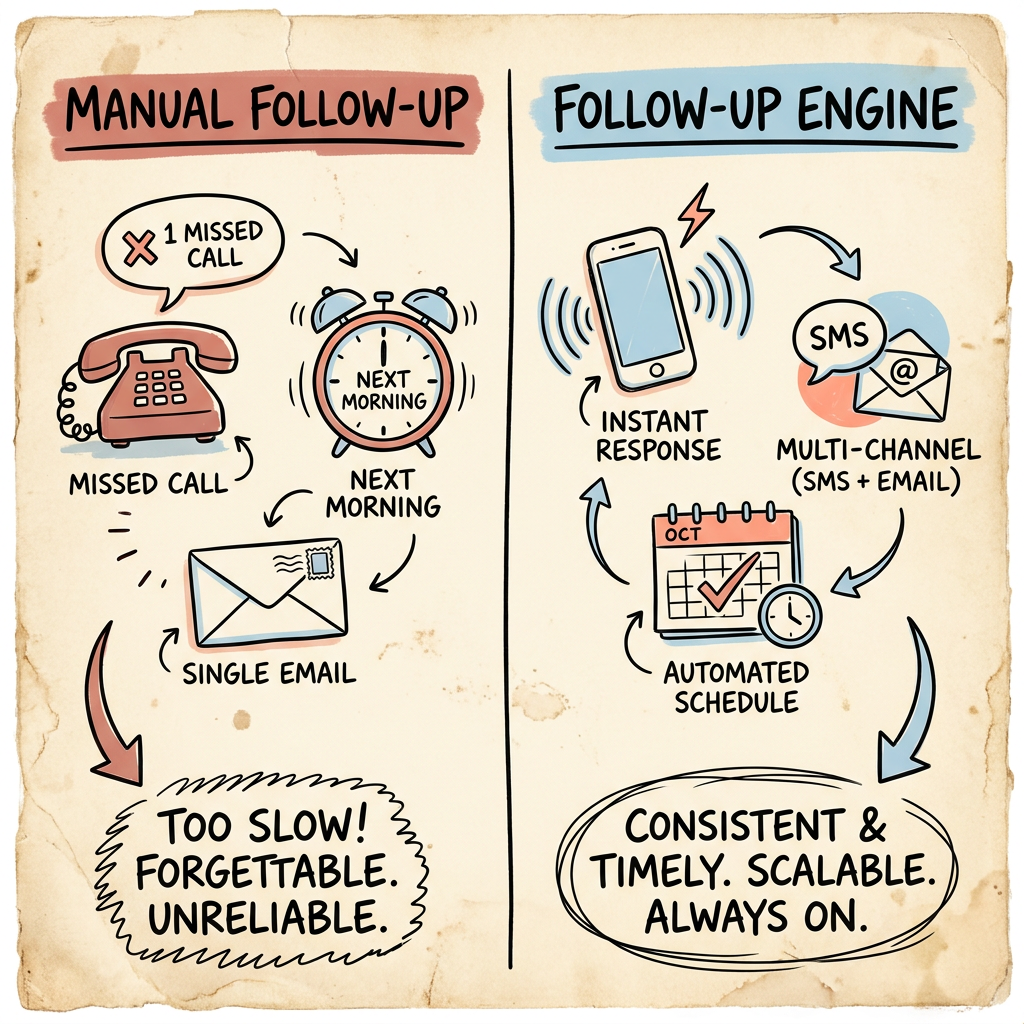
Closing the gap manually runs into human limits. A sales rep can call once or twice before it feels like chasing. They cannot call at 8pm when the homeowner is finally sitting down to think about it. They cannot send a well-timed SMS three days later while simultaneously running the next appointment. And they are carrying twenty other leads at the same time.
The result is that most post-quote follow-up is inconsistent, too slow, and too infrequent - which means a large share of the revenue those quotes represent quietly slips to a competitor who happened to follow up sooner.
How does a follow-up engine recover cold solar quotes?
A well-built AI follow-up engine operates differently from a dialler that calls a lead once. It works the lead across voice, SMS and email, over the window that matters, in a way that is sequenced and deliberate - not a blast of contact, but a persistent, brand-safe presence.
The psychology here matters. Effective post-quote follow-up does not push for a decision. It re-opens the loop. A homeowner who requested a quote came to you with an unfinished task - they were trying to solve their power bill. If they went quiet, they did not solve it. Re-engaging from that honest position ("you never got the answer you came for") lands differently from a follow-up that leads with pressure.
What good follow-up actually looks like at this stage:
Immediate acknowledgement when the quote is sent, so the homeowner knows a real person is available.
Sequenced re-engagement across the days that follow, via the right channel at the right time - not a daily call, but considered multi-channel contact that mirrors how people actually process a considered purchase.
One idea per touch. A single, clear reason to take the next step. Stacking three arguments in one message reads as desperation; one well-chosen question or frame reads as confidence.
A graceful ease-off. As the MIT and HBR research both suggest, pushing harder rarely re-engages a quiet lead. Backing off with intention - "we'll leave this with you" - often re-triggers a reply that pressure never would.
The engine does this without asking a human to work nights and weekends, and without ever inventing an incentive or misrepresenting a figure. Brand safety is not an afterthought - it is engineered in.
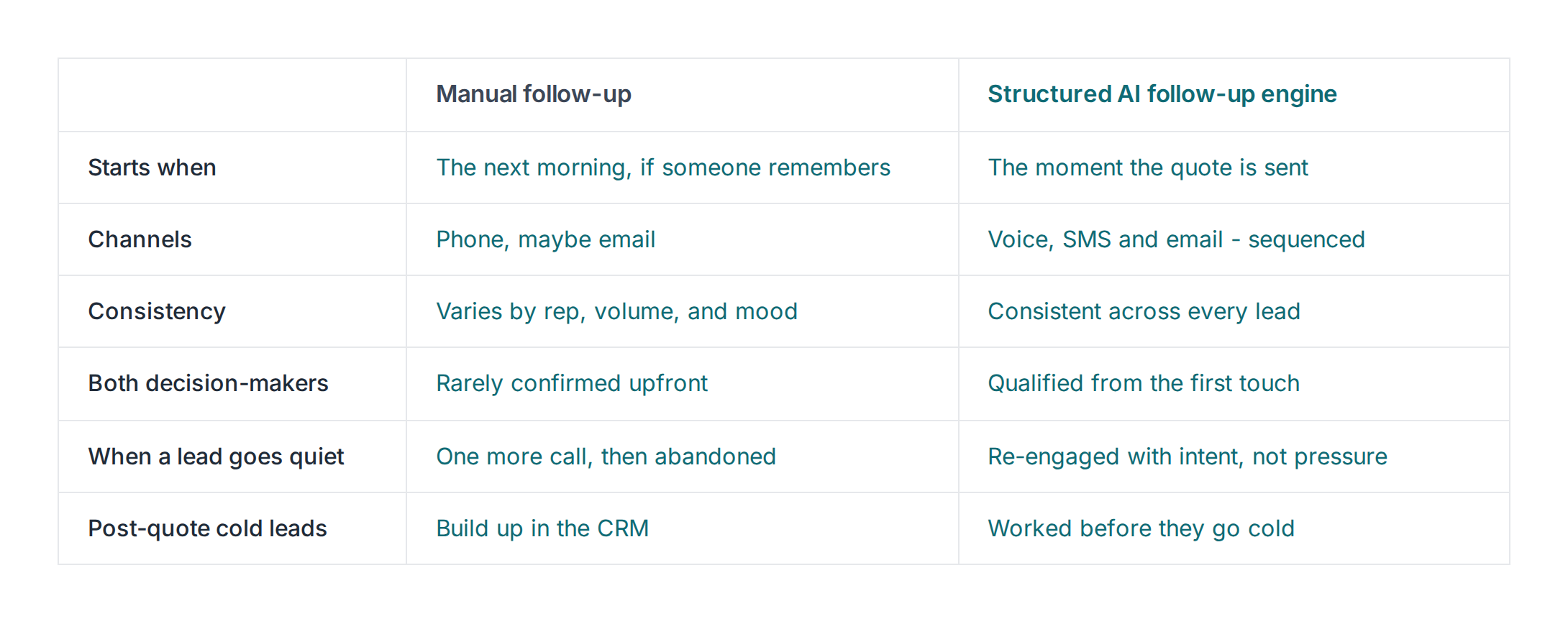
What does good post-quote follow-up look like for solar businesses in Australia?
For Australian installers, the post-quote window is especially competitive. Australia has one of the world's most active residential solar markets, with multiple installers reaching the same homeowners at the same time. In that environment, the difference between a closed job and a cold quote is often which business maintained a consistent, well-timed presence after the quote landed.
Good post-quote follow-up in this market does three things: it starts immediately (not the next morning), it includes both decision-makers in the conversation before assuming the appointment is solid, and it uses each touch to re-open the loop honestly rather than to apply pressure.
It also knows when to stop. Persistent follow-up that ignores a genuine "no" becomes a brand liability in a market where reputation travels fast and reviews are public.
Frequently asked questions
Why do solar quotes go cold after being sent? Solar quotes go cold because the homeowner has no momentum after receiving a PDF. They are comparing multiple quotes, the initial urgency fades within days, and without structured follow-up that re-opens the conversation at the right time, the decision stalls. The business that follows up first - with the right tone - usually wins the job.
What happens in a homeowner's mind after receiving a solar quote? Initial interest drops quickly as the homeowner begins comparing options. Without a follow-up that re-engages their original motivation - reducing their power bill - the decision drifts. In a considered purchase like solar, emotional momentum is perishable: it has to be maintained, not assumed.
How long do solar businesses have to follow up before a lead goes cold? Research from the MIT Lead Response Management Study shows that the odds of reaching and converting a lead drop sharply within the first hour after contact, and continue declining. After a quote is sent, the same decay applies - structured follow-up starting the same day is far more effective than calling the following morning.
What is the both-decision-makers problem in solar quotes? In residential solar, both partners in a household typically need to be part of the buying decision. A quote sent to one person, with follow-up that only ever reaches that one person, is structurally set up to stall. Strong follow-up identifies both decision-makers early and ensures both are included before the assessment is booked.
How does a follow-up engine recover cold solar quotes? A well-built AI follow-up engine re-engages cold quotes across voice, SMS and email, using sequenced, psychologically considered touchpoints that re-open the homeowner's original intent rather than applying pressure. It works within brand-safe limits - no invented urgency, no misquoted figures - and it can maintain consistent contact across a full pipeline without a human working nights and weekends.
The bottom line
Sending a solar quote is not the end of the sales process - it is the beginning of the most critical and most neglected part. In Australia's competitive residential market, the jobs that go quiet after quoting rarely say no explicitly. They drift. Structured, sequenced follow-up starting at the moment the quote is sent is what keeps deals alive and brings them to close - without asking your team to chase every lead manually.
Look at your last twenty quotes. How many got a structured follow-up in the first 48 hours - and how many are sitting in "gone cold"? That gap is the number worth talking about.


