
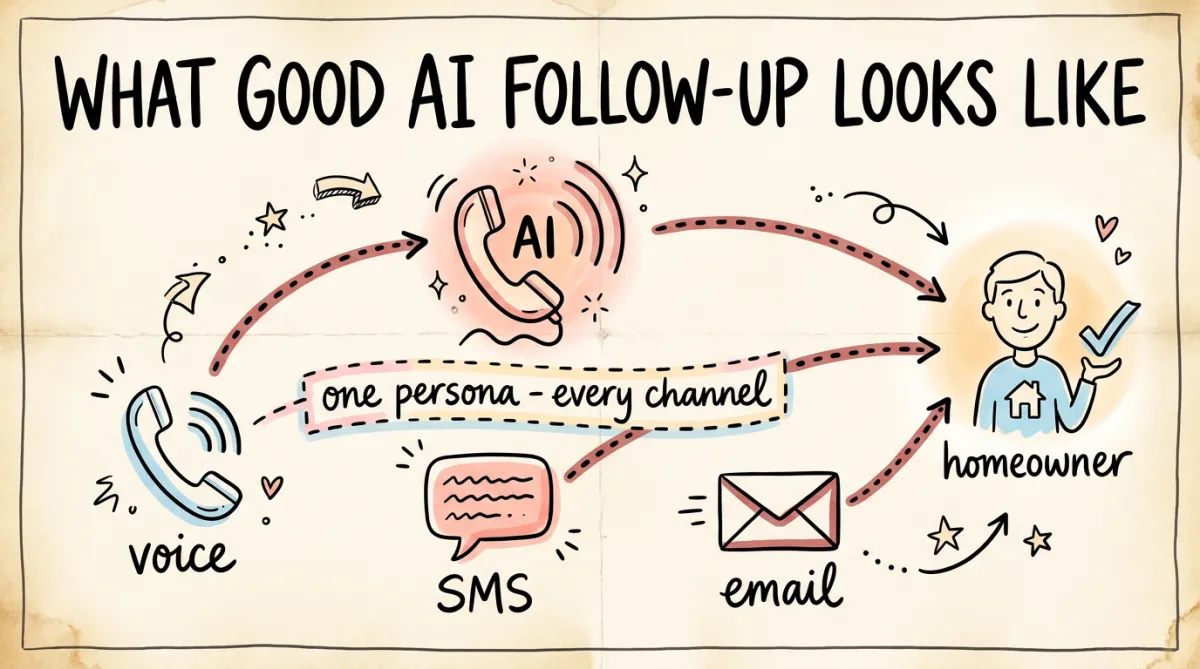
One Persona, Every Channel: AI Follow-Up for Australian Solar
The difference between AI follow-up that converts and AI follow-up that damages your brand comes down to one thing: whether it was built as an engine or bolted together as a dialler. For solar businesses in Australia, where trust is the whole sale, the bar is high. Here is what a well-built system actually looks like - and how to tell the difference before you switch one on.
What is the difference between an AI dialler and an AI sales engine for solar?
Most solar businesses, when they hear "AI follow-up", picture a voice agent that calls a lead fast. That is a dialler. A dialler is a single tool doing a single job - it calls, it either connects or it does not, and then it stops. The lead either books or goes cold.
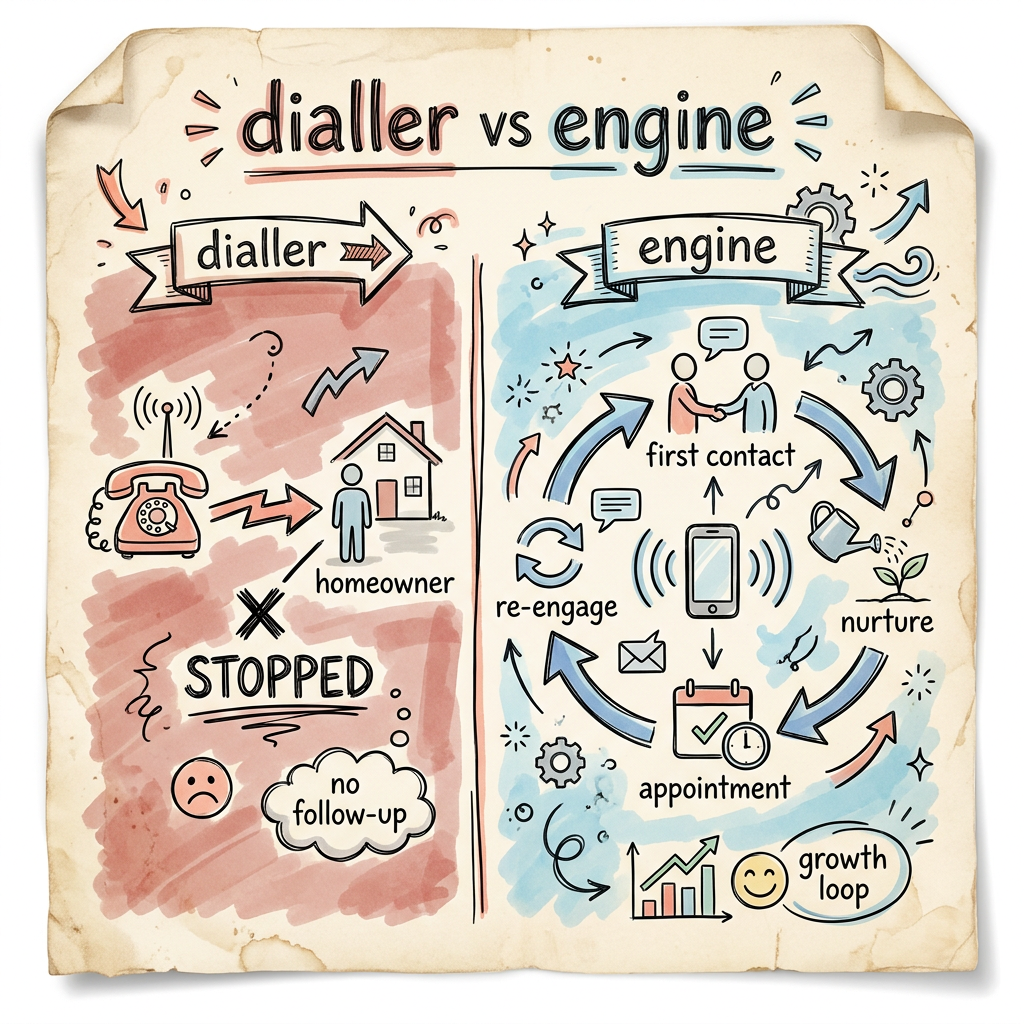
An AI sales engine is different in kind, not just degree. It works the lead across the whole lifecycle - first contact, nurture, appointment protection, and re-engagement - across voice, SMS and email, with each stage purpose-built for what the lead needs at that moment. It does not blast contact and hope; it reads where the lead is and responds in context.
For Australian solar businesses, that distinction matters commercially. A dialler that calls a cold lead at the wrong time with the wrong tone earns a complaint or a one-star review. An engine that engages a lead across the right channels, at the right cadence, with brand-safe language earns an appointment.
Why does one consistent AI persona matter in solar lead follow-up?
This is the detail that separates a well-built engine from a cobbled-together set of tools.
When a homeowner first calls back after an AI voice contact, they are already forming a judgement about whether they are dealing with a professional business or a machine that dialled them. If they then receive an SMS that sounds completely different - a different name, a different tone, a different set of references - that judgement shifts. They feel the seam. Trust, which was building, cracks.
A single, consistent AI persona means the lead hears the same voice on the phone, receives an SMS that sounds like the same person followed up in writing, and gets an email that is recognisably from the same source. That continuity is what makes a lead feel like they are dealing with an attentive business, not an automated calling list.
In solar, where the industry carries real reputation baggage - from pushy door-knockers to high-pressure kitchen-table closes - feeling attended to rather than processed is the difference between a homeowner who leans in and one who opts out.
What channels should solar AI follow-up use - voice, SMS or email?
All three - but not randomly, and not simultaneously as a blitz.
Voice is the highest-trust channel for a first contact. A real conversation, even a short one, builds rapport faster than any text. But voice cannot be the only channel, because not every homeowner answers an unfamiliar number, and not every moment is a moment for a call.
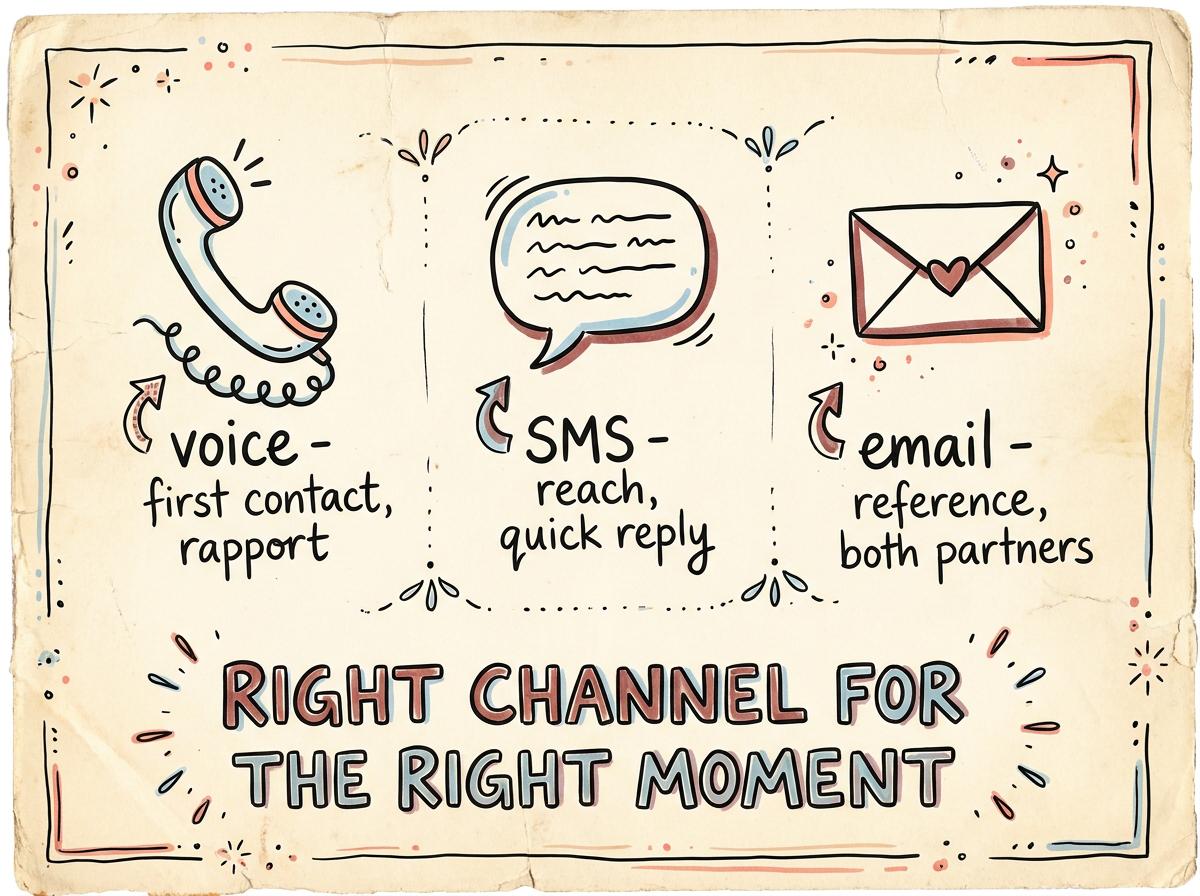
SMS reaches the homeowner in the gaps - on the couch in the evening, between school pickups. It is immediate, personal, and low-commitment to respond to. It is also the channel that tends to produce the first reply, because the homeowner can answer in a sentence without committing to a conversation they did not prepare for.
Email provides the reference layer - a written record the homeowner can come back to, pass to their partner, or use to compare quotes. It is the channel that includes both decision-makers most reliably, because a forwarded email brings a second person into the loop in a way a phone call cannot.
A well-built engine uses all three in sequence, not in parallel. Each channel handles the job it does best, and together they cover the ways real homeowners actually engage with a considered purchase.
How does AI follow-up stay brand-safe in solar?
Brand safety in solar AI is a design choice, not a default. A badly configured system will call too often, invent urgency, misquote a rebate figure, or refuse to take no for an answer - and in solar, where a one-star review travels fast and a misquoted STC incentive creates real legal exposure, that is the fastest way to turn a lead-generation tool into a brand liability.
A brand-safe system is built differently at the foundations:
It never invents a figure. Rebates, prices, and incentives are deferred to a human to confirm - the engine can reference that figures vary and a consultant will confirm specifics, but it does not improvise a number. This is the most important guardrail in solar specifically.
It is calm and non-pushy by design. The tone is helpful and informative, not pressured. It takes no for an answer gracefully and exits cleanly when a homeowner opts out.
It complies with Australian calling rules. Consent, the Do Not Call register, permitted calling hours, and honoured opt-outs are not afterthoughts - they are built into the flow.
Every call is transcribed and reviewable. If something goes wrong, you can read and hear exactly what was said. This is the accountability layer that reckless systems skip.
For Australian solar businesses, brand safety is not a nicety. It is a buying condition. Homeowners in this market are experienced enough to know when they are being processed, and their reviews reflect it.
What makes AI solar follow-up feel human rather than robotic?
The answer is not the voice quality or the accent. It is the psychology underneath.
Effective AI follow-up is engineered around how people actually make a considered purchase - which is not in response to pressure. Solar buyers convince themselves. The right approach asks the question that makes them think through their own situation, rather than pushing a claim at them.
A few principles that distinguish an engine from a blunt tool:
One idea per touch, not a stack. Each message carries a single, clear frame - the power bill that keeps arriving, the rebate window, the appointment that is still available. Stacking three arguments into one message reads as desperation; one well-chosen line reads as confidence.
Curiosity over pressure. The engine asks questions that help the homeowner arrive at their own conclusion, rather than asserting at them. "Where is your power bill heading this winter?" does more work than "Solar could save you money."
Honest re-engagement, not fake urgency. When a lead goes quiet, the engine re-opens the original loop - the problem they came with, the answer they never got - rather than manufacturing a "last chance" that did not exist. Solar buyers have seen the fake-scarcity play enough times to recognise it immediately.
This is what makes a well-built engine feel like a business is paying attention, rather than a machine going through a list.
How does multi-channel AI follow-up work across the solar sales lifecycle?
A full solar sales lifecycle has distinct moments, and each one calls for different follow-up.
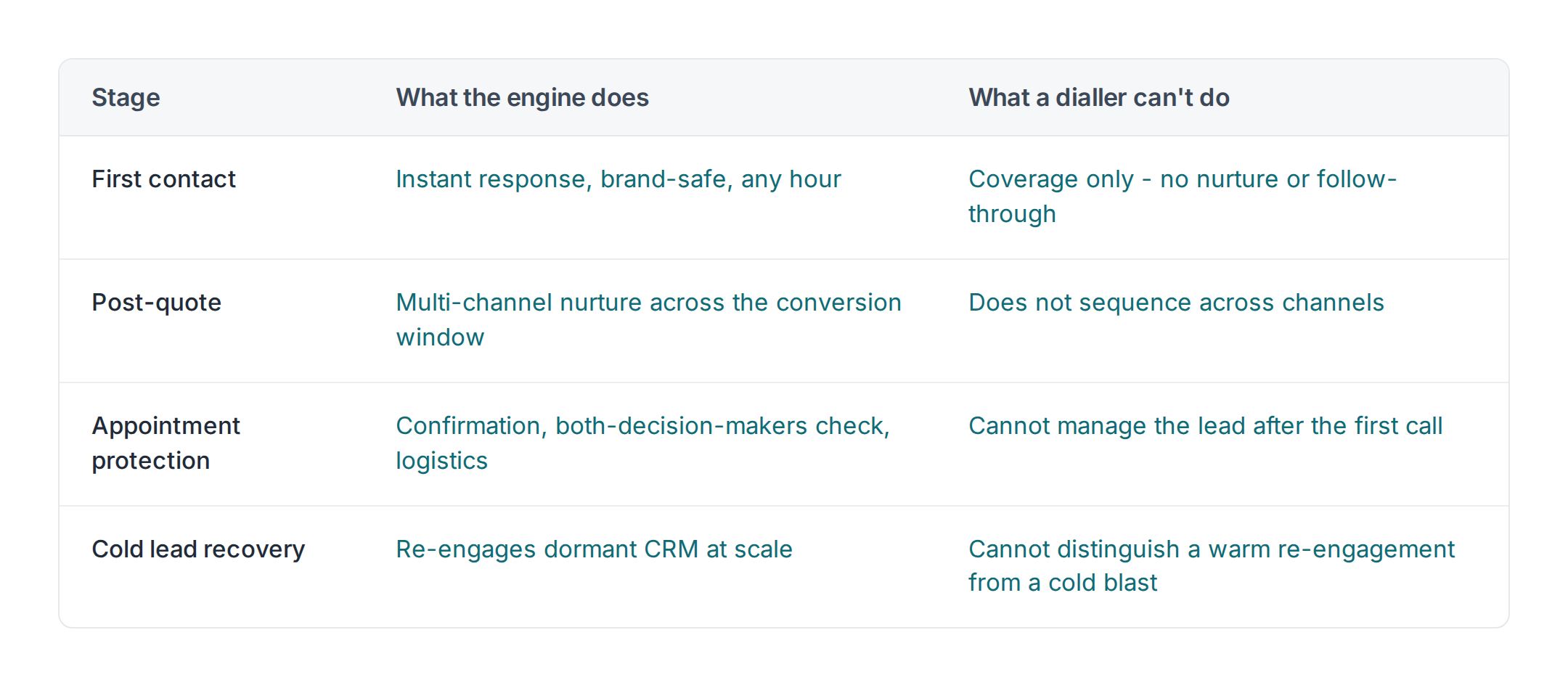
First contact after enquiry - the speed gate. The lead has just raised their hand. The engine responds within seconds, across the right channel, with a warm first touch that moves toward a qualified conversation.
Post-quote nurture - the conversion window. The quote has been sent and now the silence gap opens. The engine works this window across voice, SMS and email, re-engaging the homeowner's original intent without applying pressure - re-opening the loop, not forcing a close.
Appointment protection - the no-show gate. A booked appointment that does not hold is a wasted site visit and a lost job. The engine confirms, re-confirms, and manages the logistics of getting both decision-makers to the assessment - before the no-show, not after.
Re-engagement of cold leads - the pipeline recovery stage. Leads that went quiet three, six, or twelve months ago are not lost. In a rising-electricity-price environment, a homeowner who went cold in March may be very live in July. The engine re-engages dormant leads systematically, recovering value from a CRM that most businesses never go back to.
What should solar businesses in Australia look for in an AI follow-up system?
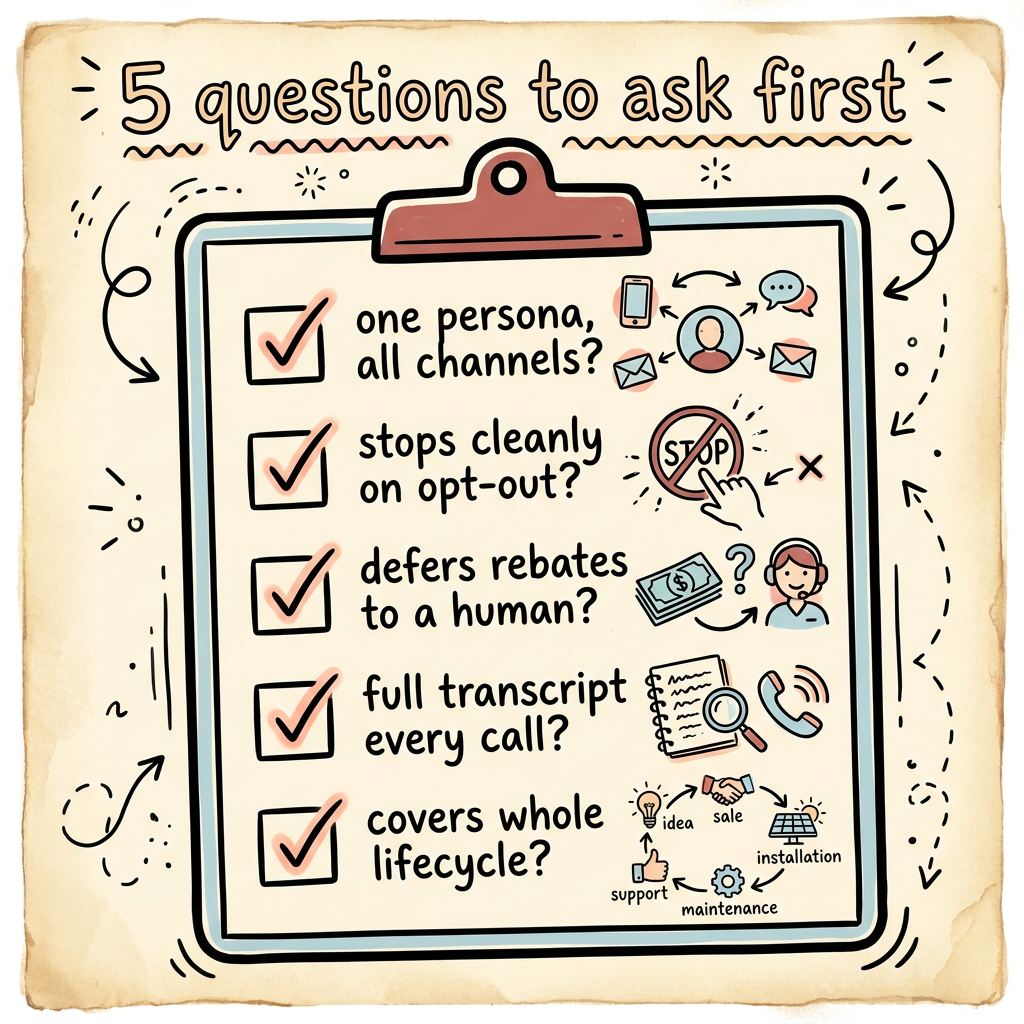
If you are assessing a system, five questions cut to what matters:
Does it work across voice, SMS and email with one consistent persona - or is it a voice tool with some SMS bolted on?
What does it do when a homeowner says no or opts out - does it stop cleanly, or does it keep calling?
How does it handle rebate or price questions - does it defer to a human, or does it improvise?
Can you read a transcript of every call - is there a full audit trail?
Does it cover the whole lifecycle - first contact, post-quote, appointment protection, re-engagement - or just one moment?
A system that cannot answer all five plainly is not ready for a market where your reviews and your compliance record are the business.
Frequently asked questions
What is the difference between an AI dialler and an AI sales engine for solar? An AI dialler calls a lead once, fast, and either connects or does not. An AI sales engine works the lead across the whole sales lifecycle - first contact, post-quote nurture, appointment protection, and cold lead re-engagement - across voice, SMS and email, with brand safety and psychology engineered into each stage.
Why does one consistent AI persona matter in solar lead follow-up? A consistent persona means the lead hears the same voice, tone, and character whether they receive a call, an SMS, or an email. Continuity builds trust. When channels sound like different systems, homeowners feel the seam - and in a trust-driven purchase like solar, that crack costs conversions.
What channels should solar AI follow-up use? Voice for first contact and rapport-building; SMS for reach and low-commitment replies; email for the reference layer that includes both decision-makers. All three, sequenced by what each channel does best - not blasted simultaneously.
How does AI follow-up stay brand-safe in solar? By design: it never invents a rebate figure, it takes no for an answer cleanly, it complies with Australian calling rules (consent, Do Not Call, permitted hours, opt-outs), and every call is transcribed and reviewable. Brand safety in solar is a non-negotiable because one bad automated interaction, at scale, creates real reputation and compliance risk.
What makes AI solar follow-up feel human rather than robotic? The psychology underneath - one idea per message, questions that help the homeowner think through their own situation, honest re-engagement rather than fake urgency. The sophistication is in the restraint, not the aggression. That is the opposite of the pushy dialler the market expects, and it is exactly why it works on a sceptical solar buyer.
The bottom line
The solar businesses winning in Australia's residential market are not running harder. They are running smarter - with a follow-up system that works the lead from first contact through to closed job, across every channel, with one consistent persona and brand safety engineered in from the start. That is the gap between a dialler and an engine, and it is the gap that decides which quotes convert and which go cold.
Take those five questions to any AI vendor you are considering - including us. The ones that cannot answer them plainly will tell you everything you need to know. If you would like to put them to us directly, that is what the call is for.


