
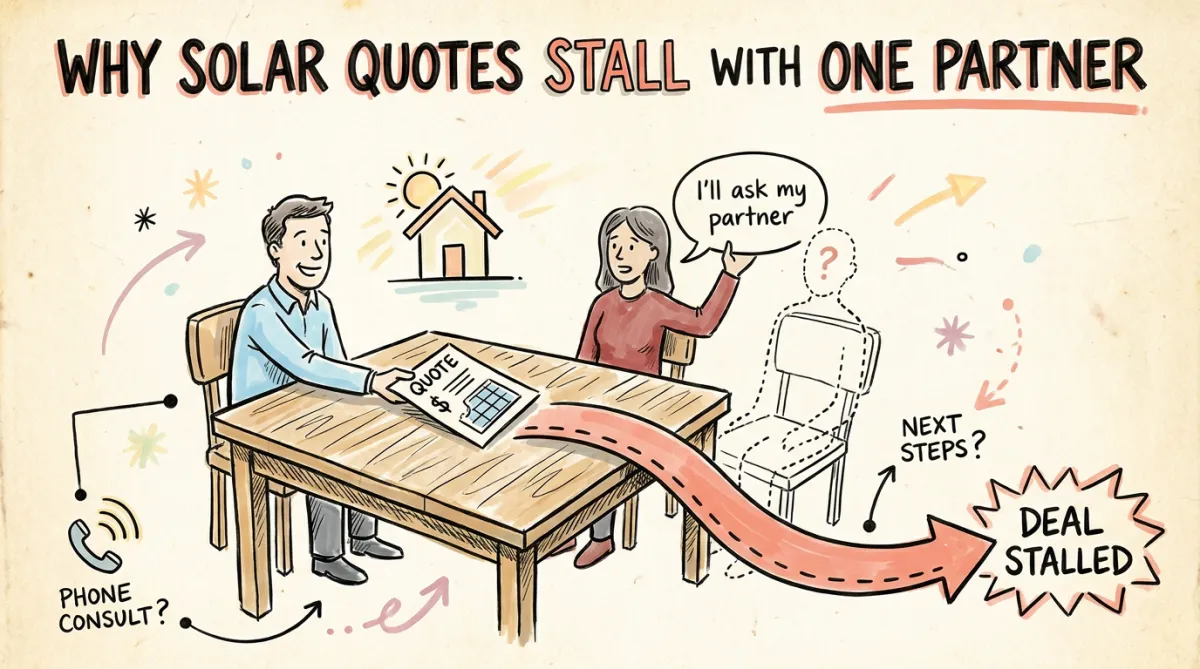
Why solar quotes stall when only one partner is home - the both-decision-makers fix for South East Queensland solar businesses
Because residential solar almost always needs both decision-makers to say yes. When only one partner is home at the assessment, the answer is "I'll have to run it past my wife/husband" - and the deal stalls. The fix is qualifying that both will attend before you book, not after. That single change protects your close rate.
The most expensive appointment in solar is the one only half the household attends
The quiet deal-killer in solar isn't price - it's an assessment where only one partner is in the room. You have paid to generate the lead, paid a rep to drive out, and set up a conversation that structurally cannot close, because the person on the couch cannot say yes on their own.
Solar is a joint household decision. It is a considered purchase tied to the family's power bill, not an impulse buy, so almost every home wants both partners across it before committing. When your rep sits down with one of them, the best possible outcome is usually "I'll run it past my partner" - and now the momentum, the rapport, and the quote all have to survive a second-hand retelling you are not there for. Most don't.
Why does a solar quote stall when only one partner is home?
Because the decision was never one person's to make, so a one-partner appointment is set up to stall before the rep knocks. It is not that the homeowner went cold on solar - it is that they physically cannot commit without the other decision-maker, and "let me check with my partner" is the polite version of a deal going into limbo.
This is a domain reality, not a customer failing. Homeowners are also braced against pressure - solar carries years of pushy-door-knocker baggage, so trust is the whole sale, and leaning on the one partner who is home to "just sign today" is exactly the move that loses it. The stall is baked in the moment a single decision-maker is booked.
Isn't this just the customer stalling - can you really prevent it?
Largely, yes - because the failure is usually a qualification gap, not a genuine objection. Whether both partners will be at the assessment is knowable before anyone drives anywhere. The businesses that quietly win aren't better closers on the day; they simply don't book appointments that only half the household will attend.
That reframe matters because it moves the fix from the hardest place to change - a live, in-home negotiation - to the easiest: the booking conversation. Get the qualification right and the doomed appointment never gets made in the first place.
What does a one-decision-maker appointment actually cost you?
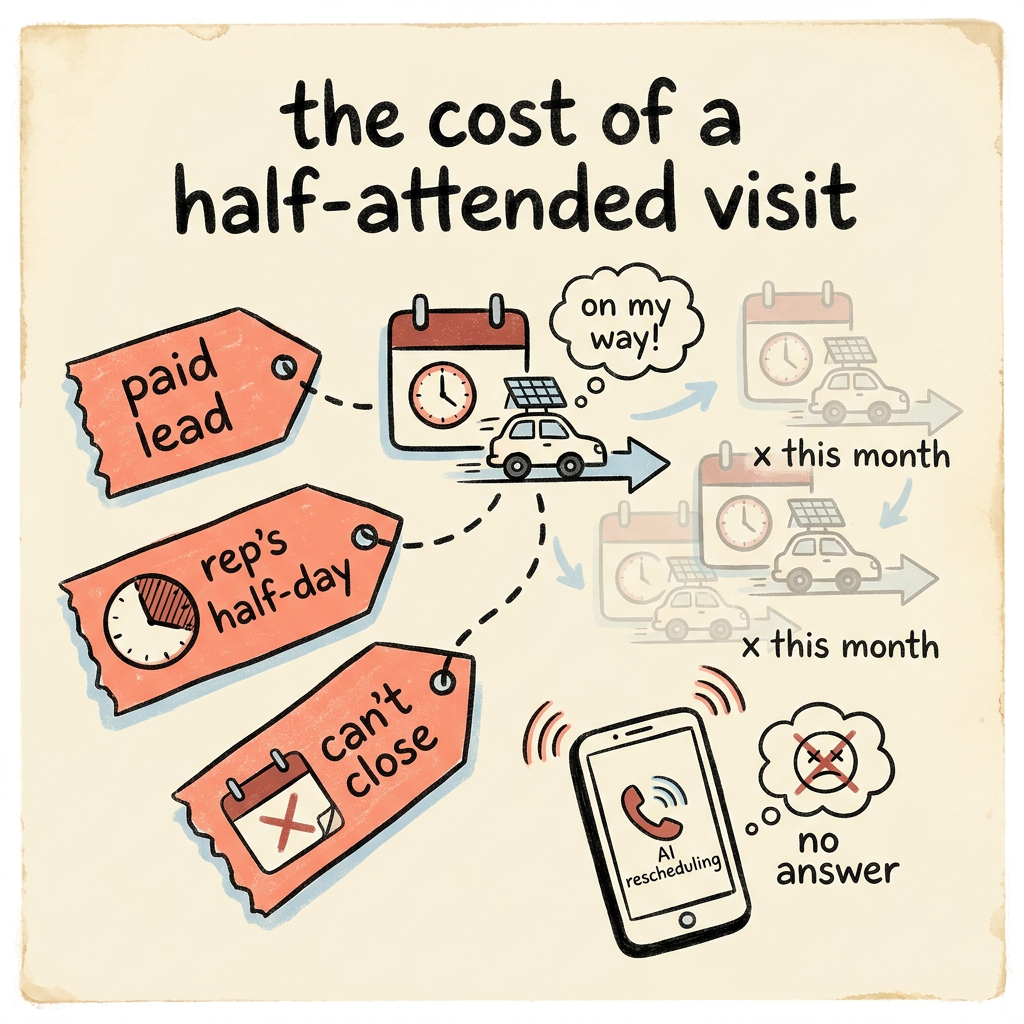
More than a wasted hour - it is a paid lead, a rep's half-day, and a booked slot that could not convert. Every assessment where only one partner shows up burns the acquisition cost of the lead, the travel and time of the visit, and the opportunity cost of the slot a closeable appointment could have used. Then the follow-up is harder, because you are now chasing a decision second-hand.
Put your own numbers to it. Say an exclusive, verified residential solar lead costs you around $50 to $100 in today's market, and a rep visit — drive time, the assessment itself, fuel and the hour of a paid closer — runs you conservatively $80 to $150 once it's all loaded in. That's easily $150 or more walking out the door on a single half-attended assessment, before you count the appointment slot a closeable lead could have used. Now run that across every one-partner visit in a month. The bill keeps arriving whether or not the deal closes — and so does the cost of the trips that were never going to.
How do you get both decision-makers to the assessment - without being pushy?
You qualify for both before booking - and you do it with craft, not pressure. This is where most follow-up quietly fails. A weak process hears "my partner's working that night" and folds straight to "no worries, we'll book you in anyway" - locking in an appointment that is now engineered to stall. Strong handling treats that as a signal to work with, calmly: surfacing why both being there actually saves the household time, or finding a slot that genuinely suits them both, rather than booking a doomed one.
Done well, this is question-led and restrained - the opposite of the hard close the industry is known for. You are not pressuring anyone; you are asking the question that makes the value of both partners being there obvious, and letting them arrive at it.
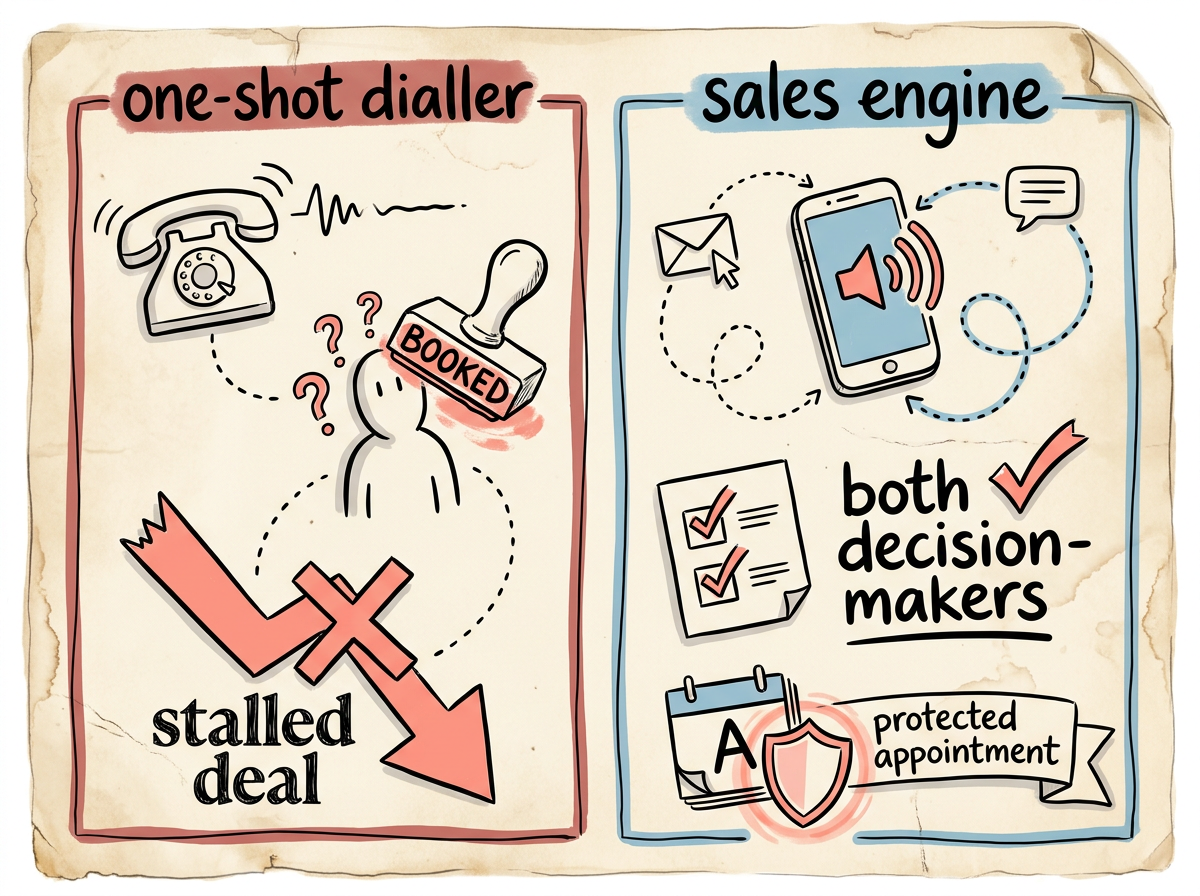
Here is the part most vendors miss: getting this right at scale is not a job for a single fast phone call. It is what a proper AI sales engine is built for - not a dialler that rings once and pushes for a booking, but a multi-channel, multi-stage system that engages a lead across voice, SMS and email as one consistent persona, qualifies for both decision-makers before it books, protects that appointment as the day approaches, and re-engages properly if it lapses. The intelligence and restraint around the booking are the whole point - a blunt dialler cannot do any of it, and often makes the stall worse.
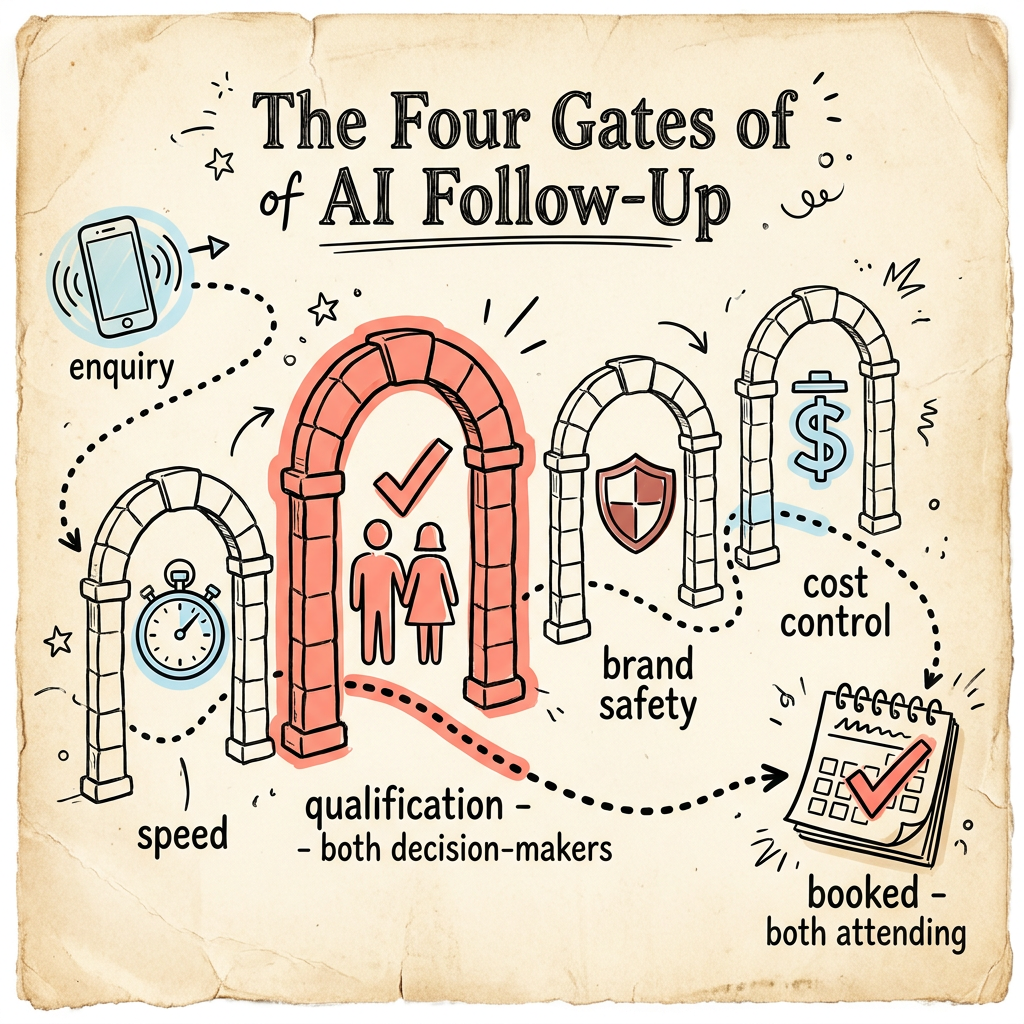
The Four Gates of AI Follow-Up
The both-decision-makers rule is really Gate 2 of the standard we hold any AI follow-up to - the Four Gates of AI Follow-Up. Clear all four, or it should not run:
Gate 1 - Speed. It engages the lead promptly, so the conversation starts while intent is high.
Gate 2 - Qualification. It confirms the homeowner is genuinely in the market and that both decision-makers will attend before it books - the single biggest protector of your close rate.
Gate 3 - Brand safety. Calm, non-pushy, honest - it never invents a figure or a rebate, and it never leans on the one partner who happens to be home.
Gate 4 - Cost control. Predictable, capped spend, so protecting your close rate never becomes a runaway bill.
Gate 2 is the one this whole article turns on. Most tools stop at Gate 1.
Frequently asked questions
Why do solar deals need both decision-makers present? Because residential solar is a considered, joint household purchase tied to the family's power bill. One partner rarely commits alone, so an assessment with only one of them present usually ends in "I'll run it past my partner" - and the deal stalls where you cannot influence it.
Can you really stop the one-partner stall? Mostly, yes. Whether both partners will attend is knowable before booking, so the fix is qualification, not on-the-day closing. Businesses that confirm both decision-makers before they book simply avoid making the doomed appointment.
What does a half-attended assessment cost? A paid lead, a rep's time and travel, and a slot that could not convert - then a harder second-hand follow-up. Across a month of them, it is a real and recoverable drain on your close rate.
How do you get both partners there without pushing? By qualifying for both with craft, not pressure - question-led and calm, surfacing why both being there suits the household, or finding a time that genuinely works. Pushing the one partner who is home is exactly what loses a trust-driven sale.
Isn't an AI caller going to make this worse? It can, if it is a blunt dialler that just chases a booking. A well-built AI sales engine does the opposite - it qualifies for both decision-makers, stays calm and honest, and works the lead across channels with restraint, which protects your brand rather than risking it.
The bottom line
The solar deals you are losing to "I'll have to check with my partner" were mostly lost at booking, not on the day. It is not your closers - it is an appointment that only half the household was ever going to attend. Confirm both decision-makers before you book, hold any AI follow-up to the Four Gates, and the most expensive appointment in solar stops happening.
See it work before you decide anything
You don't have to take our word for how qualifying-for-both actually works. We've built the whole thing - the multi-channel engagement, the qualification, the brand-safe follow-up - into a live demo you can watch for yourself. No pitch, no obligation. Just see how it handles a real lead, and decide from there.


