
Why your solar competitor two suburbs over is winning your postcodes - the after-hours gap
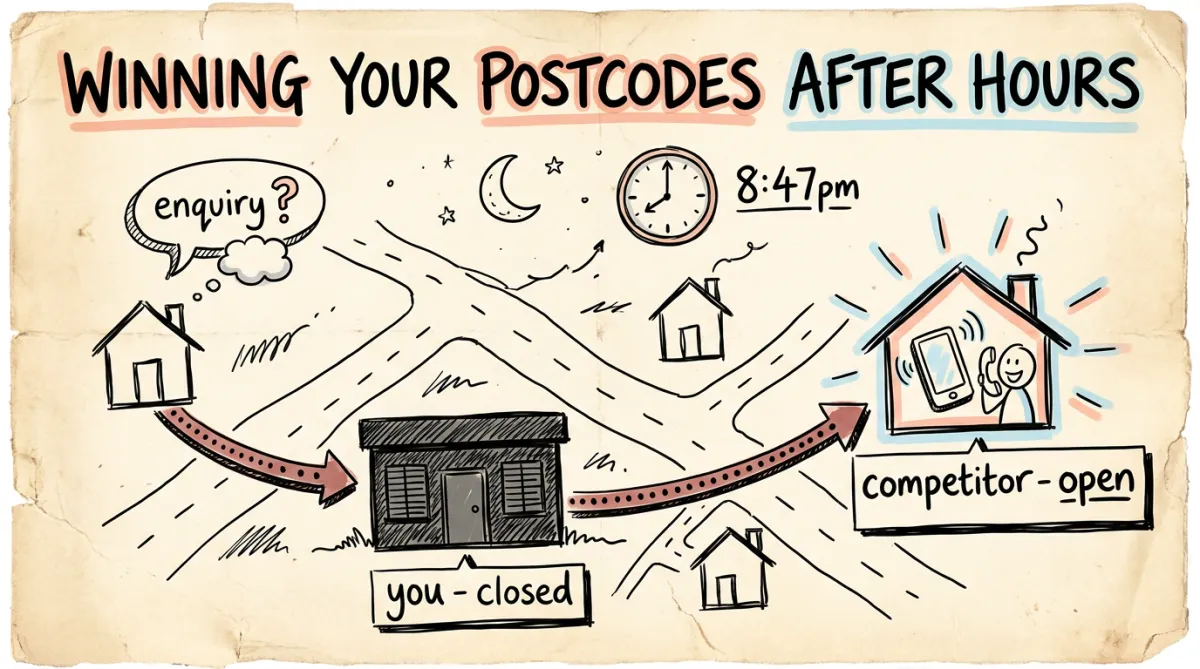
A night-time suburb map showing an after-hours solar enquiry going past a closed office to a competitor who answers.
You are probably not losing solar jobs on price or product. You are losing them on timing. Most enquiries land after 5pm or on weekends, and homeowners go with the first company to call back. So a competitor who answers at 8pm is quietly taking the leads in your own postcodes - while your team is at home.
It wasn't your price. It was who called first

When a job goes to a competitor, the easy assumption is that they were cheaper or better known. Usually they were just faster. A homeowner fills in a form on three solar sites in an evening, and the first business to actually call them back gets the conversation, the rapport, and the appointment. The other two ring back the next morning to find the decision already leaning away from them.
This is not a small edge. Widely-cited industry figures put it at around 78% of customers buying from the business that responds first, and even on the more conservative estimates the first responder wins roughly half of all deals. First contact, not best pitch, wins most of the time. Which means the fight for your postcodes is being decided in the minutes after an enquiry - not on your pricing page.
When solar leads actually arrive - and where your team is
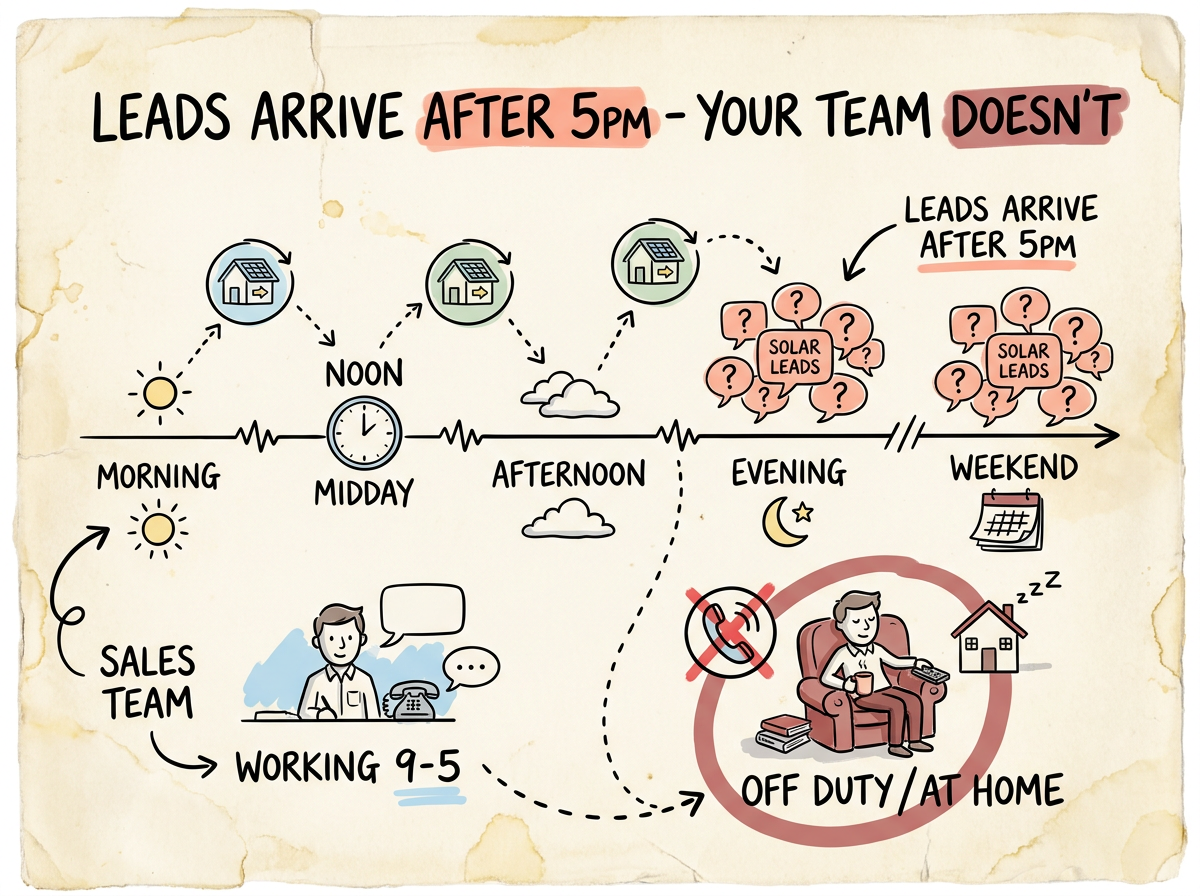
Here is the awkward overlap. Homeowners research solar in their own time - evenings after work, weekends, on the couch. But that is exactly when your sales team is off the clock. The enquiries with the most intent arrive at the moment you are least able to answer them.
This is well documented in home services: around 41% of jobs booked online come in after hours - evenings and weekends - and in most businesses they sit unanswered until the next morning. It is not one company's problem; it is the shape of the whole market. The leads are landing; the lights are just off when they do.
The local twist: this is a postcode war
Here is what makes it sting. This is not an abstract "respond faster" lesson. In your service area, there is very likely a competitor who has worked this out and set themselves up to answer when you do not. Every evening enquiry in your suburbs that they pick up and you miss is a job leaving your patch. They are not out-marketing you. They are out-answering you, in the exact postcodes you both fight over.
And once they have had the first conversation, booked the assessment, and built rapport, price rarely claws it back. The race was over before you knew it started.
Why "just work later" doesn't fix it
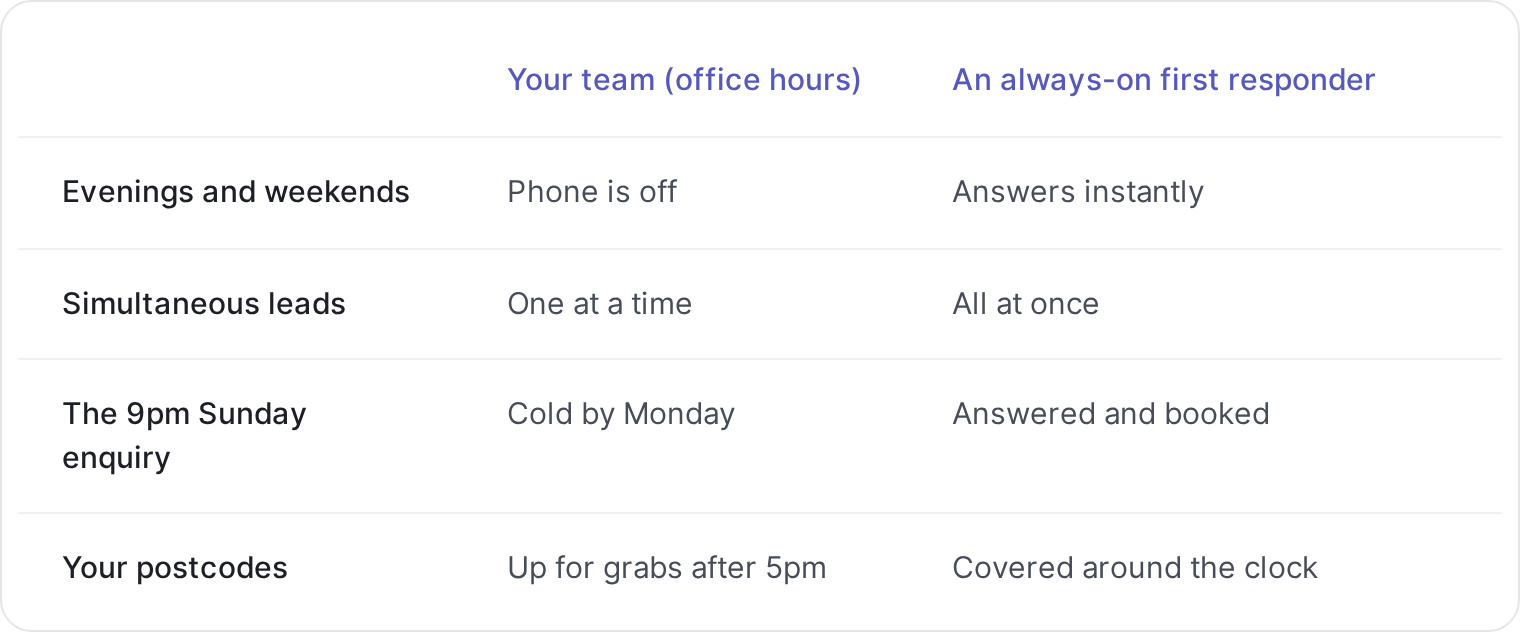
The obvious answer - have someone cover evenings and weekends - runs straight into human limits. One person can take one call at a time. Nobody wants to work every night and weekend, and paying a team to sit on standby for after-hours leads rarely stacks up. Even then, you would only cover some of the hours, some of the time. The enquiries that arrive at 9:40pm on a Sunday will still go cold, and those are exactly the ones your competitor is scooping.
You cannot out-hustle this with roster changes. It is a coverage problem, and coverage is where humans structurally lose.
How to close the gap: cover the hours you can't
The fix is to make sure every enquiry gets an instant, professional first response - at any hour - without asking anyone to work through the night. A well-built AI first responder doesn't just answer - it goes on the front foot the moment a lead arrives, evening or weekend. It calls straight away, has a real conversation, answers the basics, and books a qualified appointment straight into the calendar. And if the lead doesn't pick up, it keeps working them - a sequenced follow-up across voice, SMS and email over the following days, under a single consistent persona, so the enquiry is actively nurtured rather than left waiting for a callback that never comes.

Your people stop losing evening leads they never even saw, and start turning up to booked assessments won while the competition was asleep. The key is "well-built" - not a single after-hours autoresponder, but a multi-day, multi-channel nurture that starts the instant the lead lands, and stays calm, non-pushy and brand-safe throughout, so speed never comes at the cost of the reputation you have built.
Frequently asked questions
Do solar customers really just go with whoever responds first? Largely, yes. Industry figures suggest around 78% buy from the first business to respond, and even conservative estimates put the first responder at roughly half of all deals, because that company gets the first real conversation and builds rapport before anyone else calls. Speed of first contact beats almost everything else.
What happens to leads that come in after hours? If no one answers, most cool off or get picked up by a competitor who does. Since a big share of solar enquiries arrive in the evenings and on weekends, an office-hours-only follow-up is leaving a lot of your best leads on the table.
How do I cover after-hours leads without hiring night staff? An always-on AI first responder engages every lead the instant it lands, at any hour, then keeps following up across call, SMS and email until it books the appointment - so leads are actively worked, not just answered once. Coverage without a night roster.
The bottom line
The jobs you are losing in your own suburbs are not usually lost on price. They are lost in the gap between when a homeowner enquires and when someone actually calls back - a gap that is widest exactly when your team is off. Close it and the postcode war tilts your way. Leave it open and you are handing your competitor the leads you paid to generate.
See it work before you decide anything
You don't have to take our word for any of this. We've built the whole thing - the instant engagement, the multi-channel follow-up, the sales psychology, the brand-safe design - into a live demo you can watch for yourself.
No pitch, no obligation. Just see how it actually handles a lead, and decide from there.


